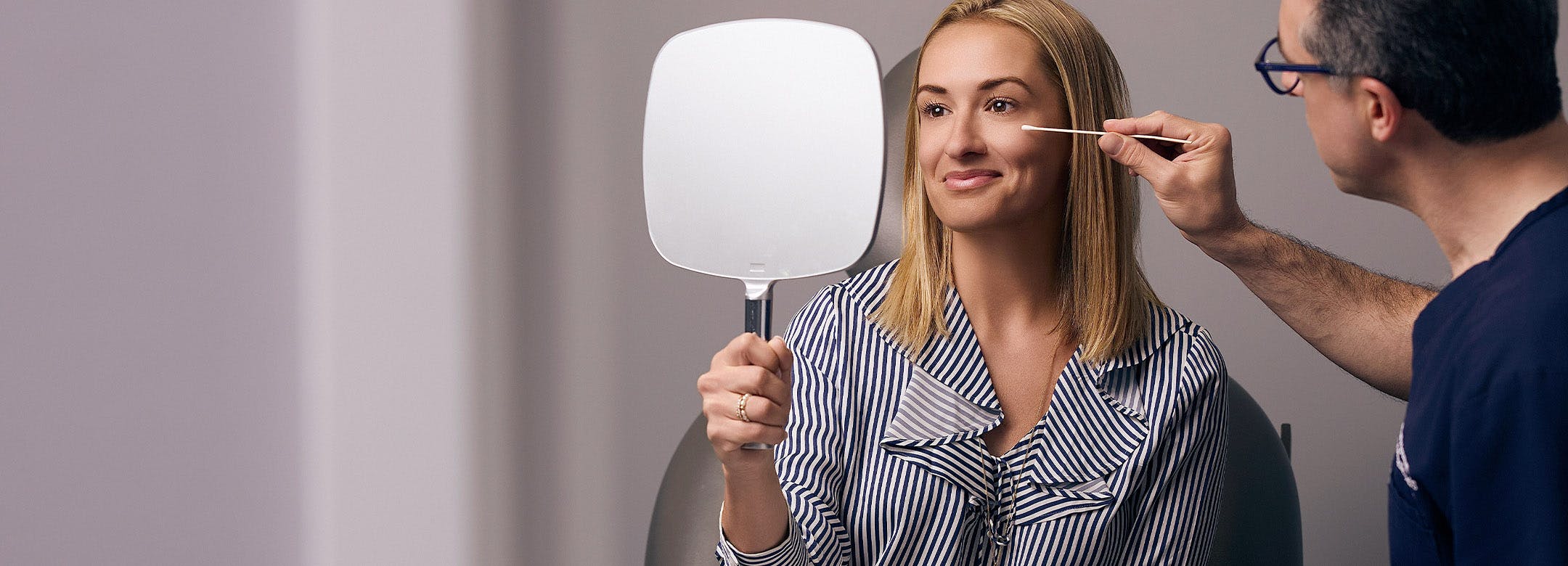

Micro-BOTOX and Baby BOTOX refer to conservative injection techniques that use lower doses of botulinum toxin to subtly relax targeted facial muscles rather than fully immobilizing them. These approaches have gained popularity among younger patients who want to prevent fine lines from forming while maintaining natural facial movement.
In this blog, we'll discuss how these techniques differ from traditional BOTOX, who makes an ideal candidate, and what results you can expect.
How Micro-BOTOX and Baby BOTOX Work
Traditional BOTOX treatments use standard doses to block nerve signals to muscles, preventing them from contracting and smoothing existing wrinkles. Micro-BOTOX and Baby BOTOX take a different approach by using smaller amounts strategically placed to soften muscle activity.
Key differences from traditional BOTOX include:
- Lower dosing: Fewer units per treatment area preserve natural expression.
- Precise micro-droplet placement: Injections target specific muscle fibers rather than entire muscle groups.
- Subtle muscle modulation: Movement is reduced, not eliminated, so your face still looks like you.
- Preventative focus: The goal is to slow wrinkle formation before lines become etched into the skin.
The result is a refreshed appearance that doesn't sacrifice your ability to express emotions naturally.
Who Is a Good Candidate?
These techniques are particularly well-suited for patients who want results that look effortless and undetectable. Dr. Jason Bloom, MD, FACS, and Dr. Julie Shtraks, MD, evaluate each patient's facial anatomy and goals to determine whether micro-dosing is the right approach.
Ideal candidates include:
- Younger patients (20s-30s): Those with early fine lines who want to prevent deeper wrinkles from developing.
- First-time BOTOX patients: Anyone nervous about looking "overdone" can start conservatively and adjust over time.
- Professionals who need expression: People in careers where natural facial movement matters, such as actors, public speakers, or client-facing roles.
- Maintenance patients: Those who've had traditional BOTOX and want to extend results with lighter touch-up treatments.
What Areas Can Be Treated?
Micro-BOTOX and Baby BOTOX can address the same areas as traditional treatments, just with a lighter touch. The expert injectable team at Bloom Facial Plastics customizes each treatment based on your unique facial dynamics.
Common treatment areas include:
- Forehead lines: Horizontal creases that appear when raising eyebrows.
- Frown lines (the "11s"): Vertical lines between the brows caused by squinting or concentrating.
- Crow's feet: Fine lines radiating from the outer corners of the eyes.
- Bunny lines: Wrinkles on the sides of the nose.
- Upper lip lines: Subtle smoothing without affecting lip movement.
What to Expect: Results and Maintenance
One advantage of micro-dosing is a more gradual, natural-looking result. BOTOX injections usually begin working one to three days after treatment, though it can take a week or more to see full results.
Results and maintenance considerations include:
- Onset: Effects typically appear within three to seven days.
- Duration: Results generally last two to three months with micro-dosing, compared to three to four months with traditional dosing.
- Frequency: More frequent but smaller treatments may help train muscles to stay relaxed over time.
- Safety: Research suggests that getting mini doses of BOTOX may have a preventive effect, keeping wrinkles from developing as quickly or as intensely.
The effects are temporary, and there's no evidence that stopping treatment will make your skin look worse than before you started.
Expert Injectable Care at Bloom Facial Plastics
Whether you're exploring BOTOX for the first time or seeking a more subtle approach to maintenance, the key to beautiful results lies in your injector's skill and artistry.
Schedule a consultation at Bloom Facial Plastics in Bryn Mawr to discover whether Micro-BOTOX or Baby BOTOX is right for your aesthetic goals.